
Aluminum Wiring in South Florida Homes: What Your 4-Point Inspection Found, What It Means, and What to Do Next

Trophy Electric LLC • August 4, 2026

Share this article

If your 4-point inspection came back with aluminum wiring flagged in the electrical section, you are not alone. South Florida experienced significant residential growth during the aluminum wiring era 1965 to 1975 and thousands of homes across Palm Beach and Broward County were built with single-strand aluminum branch circuit wiring. For most homeowners, the problem stays hidden until an insurance renewal, a home sale, or a routine inspection surfaces it.

This guide explains what the flag means, why Florida insurers treat it as a hard stop, and what your remediation options actually are — with real costs and what each method means for your coverage. At Trophy Electric LLC, our licensed master electricians in Boca Raton have handled aluminum wiring remediation across South Florida for years, and we walk every homeowner through the same decision: COPALUM, AlumiConn, or full copper rewire.

What Is Single-Strand Aluminum Wiring — and Why Did Builders Use It?

From roughly 1965 to 1975, a shortage of copper combined with rising copper prices pushed builders across the country, and especially in high-growth markets like South Florida, toward aluminum as a substitute for residential branch circuit wiring. Aluminum conducts electricity well and was significantly cheaper than copper. At the time, it was fully code-compliant, and millions of homes were wired with it.

Single-strand aluminum wiring is silver-colored rather than the orange-red of copper, and the cable sheathing is typically stamped "AL" or "Aluminum." If your cable reads "CU-clad" or "Copper-clad," the wire uses copper-coated aluminum and is not covered by the same repair recommendations. If you cannot determine the wiring type by visual inspection, a licensed electrician can confirm it definitively.

After 1975, the industry largely moved back to copper for branch circuits. Aluminum is still widely used today for high-load applications, HVAC systems, electric ranges, dryers, and service entrance conductors, in multi-strand form. Multi-strand aluminum for these 240-volt loads is generally accepted by Florida insurers and does not require remediation. What triggers 4-point inspection failures is the single-strand aluminum used in the 15- and 20-amp branch circuits that run to your outlets, switches, and light fixtures.

The Fire Hazard: What CPSC Research Actually Shows

The U.S. Consumer Product Safety Commission (CPSC) has conducted extensive research on aluminum branch circuit wiring. A national survey conducted by the Franklin Research Institute for CPSC found that homes built before 1972 and wired with aluminum are 55 times more likely to have one or more wire connections at outlets reach "Fire Hazard Conditions" compared to homes wired with copper. (Source: CPSC Publication 516 — Repairing Aluminum Wiring)

That number measures connections reaching conditions capable of starting a fire — not fires actually started. The survey covered outlet connections only, not every splice and junction in a home. The CPSC notes explicitly that it did not address all types of aluminum wire connections, meaning the full scope of risk in a typical home is broader than the outlet study alone captured.

Three physical properties of aluminum drive this elevated risk:


  • Thermal expansion and contraction. Aluminum expands and contracts more than copper with temperature changes. Over time, this movement causes connections to work loose. A loose connection increases resistance; resistance creates heat; heat, sustained over time, can ignite surrounding materials.
  • Creep. Under sustained clamping pressure, the force a screw terminal applies, aluminum deforms slowly over time, a property called creep. This causes screw-type terminals to loosen even without temperature cycling.
  • Oxidation. Aluminum forms an electrically resistant oxide layer on its surface. At connection points, this oxide reduces conductivity, increases heat, and compounds the loose-connection problem.

Standard residential wiring devices, outlets, switches, light fixtures, rated only for copper (marked "CU") accelerate connection failure when used with aluminum wire. This is why remediation is not optional if you need homeowners insurance coverage in Florida.

Why Aluminum Wiring Fails Florida's 4-Point Inspection

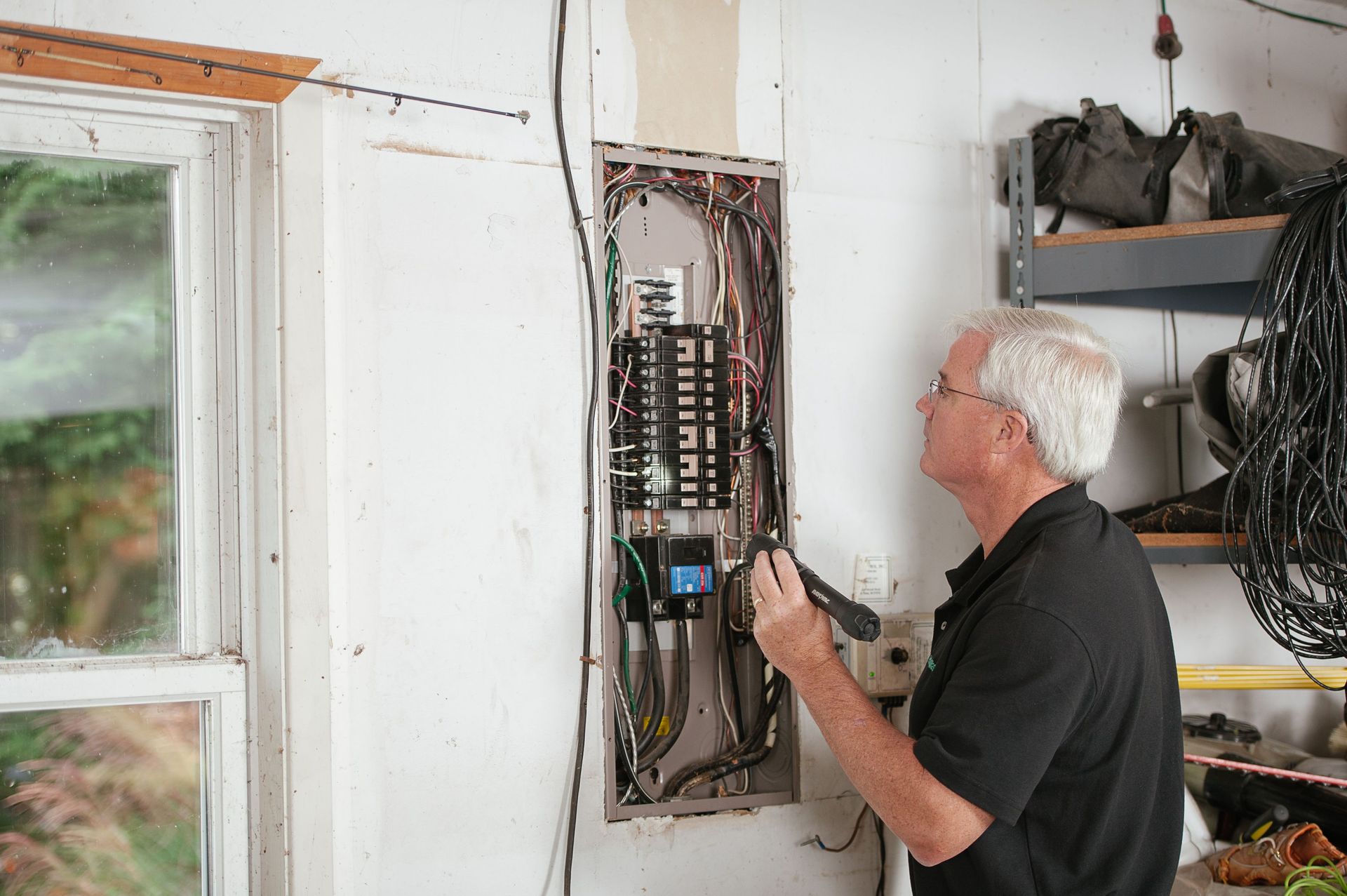
A 4-point electrical inspection in South Florida is an insurance-driven evaluation of four systems: roof, electrical, plumbing, and HVAC. For the electrical section, inspectors document conductor material, service amperage, wiring type, panel condition, and visible hazards such as double-tapped breakers, exposed wiring, and corrosion.

When an inspector identifies single-strand aluminum branch circuit wiring, the result is a flag that almost always triggers insurer action. Florida's state-backed insurer of last resort, Citizens Property Insurance, now requires specific documentation for any aluminum wiring remediation: signed certification from a licensed electrician, permit numbers, inspection records, and photographs must all accompany the updated 4-point form. Citizens updated its requirements to require this separate certification package alongside the standard inspection report. (Source: Residential Inspector of America — New Citizens 4-Point Guidelines)

This matters practically: even if you have had remediation done, missing permits or absent electrician documentation can cause a carrier to treat the work as though it never happened, requiring you to have it re-done, re-permitted, and re-inspected. Every repair must be properly pulled and closed to survive underwriting.

How Florida Homeowners Insurance Companies Handle Aluminum Wiring

No Florida carrier will write a homeowners policy on a home with active, unmodified single-strand aluminum branch circuit wiring. The insurance market in Florida has tightened significantly, and aluminum wiring is a hard stop at underwriting.

After proper remediation, the carrier landscape splits into three positions:

  • Accept approved connector repairs (COPALUM or AlumiConn). Some carriers will write coverage once remediation is complete, permitted, and documented by a licensed electrician.
  • Require full copper rewire only. Some carriers will not accept any connector-based repair, regardless of quality. Only complete copper rewiring opens coverage with these companies.
  • Decline regardless. A smaller number of carriers will not write aluminum-wired homes under any circumstances, even after remediation.

This means the remediation method you choose affects not just the cost of the repair, it determines which insurers you can access afterward. A homeowner who chooses AlumiConn connectors may qualify with carriers that accept connectors but be locked out of carriers that require full rewire. If your goal is maximum insurance options at the best premium, the full rewire cost calculus changes.

Compounding the issue: many South Florida homes from this era were also built with Federal Pacific or Zinsco electrical panels a combination that often requires addressing both problems before any carrier will write coverage. If your electrical panel is also undersized or of a flagged brand, coordinating that work with your aluminum wiring remediation saves time, permits, and inspection scheduling.

Your Three Remediation Options: COPALUM, AlumiConn, or Full Copper Rewire

CPSC Publication 516 outlines two permanently approved connector repair methods and full replacement. Here is what each involves and what it costs in South Florida.

Option 1: COPALUM Crimp Connectors — The Gold Standard

COPALUM uses a high-pressure crimp connector to create a permanent copper-to-aluminum connection at every termination point in the home: outlets, switches, light fixtures, junction boxes, and appliance connections. CPSC staff considers pigtailing with COPALUM a safe and permanent repair. COPALUM installation requires a specialized crimping tool and installer certification, not every electrician is equipped to perform it.

Typical cost in South Florida: $3,500–$8,000 , depending on home size and the number of connection points. (Source: WeShopInsurance.com — Can You Insure a Florida Home With Aluminum Wiring? (2026))

COPALUM is widely accepted by Florida carriers that allow connector-based repairs and is typically the preferred option among 4-point inspectors when documentation is reviewed.

Option 2: AlumiConn Connectors — The More Available Alternative

AlumiConn connectors use a set-screw design to create a secure aluminum-to-copper connection at every termination point. CPSC recognizes AlumiConn as an acceptable alternative repair when COPALUM is unavailable. Like COPALUM, AlumiConn must be installed at every connection point, outlets, switches, fixtures, junction boxes, and appliances. Partial remediation, addressing some connections but not others, does not satisfy insurance underwriting requirements and does not clear a 4-point inspection flag.

Typical cost in South Florida: $1,500–$5,000 , depending on home size. AlumiConn is more widely available from licensed electricians than COPALUM and is generally the more cost-effective connector-based option.

AlumiConn is accepted by Florida carriers that allow connector repairs. It is not accepted by carriers that require full rewire, so confirm carrier requirements before committing if you want to preserve maximum insurance options.

Option 3: Full Copper Rewire — The Permanent Solution

A full copper rewire replaces all aluminum branch circuit wiring with copper throughout the home. It eliminates the aluminum wiring issue for every Florida carrier, opens the full insurance market, and removes any future documentation burden when selling or refinancing. It is the right choice when the existing wiring shows significant deterioration, when major renovations are planned anyway, or when the homeowner wants to close the chapter entirely.

Typical cost in South Florida: $12,000–$20,000+ , depending on home size, accessibility, and scope. All rewiring work requires permits in Palm Beach and Broward Counties, and inspections must be completed before walls are closed. Our post on Florida electrical permit requirements covers what the permitting process involves. After rewiring, AFCI breaker requirements in Florida apply to the newly rewired circuits — your licensed electrician handles compliance as part of the project.

How to Identify Aluminum Wiring in Your South Florida Home

If your home was built between 1965 and 1975, these are the most reliable preliminary indicators:

  • Check cable sheathing at the electrical panel or any exposed wiring. Aluminum branch circuit wiring is stamped "AL" or "Aluminum." Copper wire reads "CU." Copper-clad aluminum reads "CU-clad" — a different product covered by different repair guidance.
  • Look at exposed wire ends. Aluminum is silver-colored. Copper is orange-red or reddish-brown.
  • Review your 4-point inspection report. If it documents "aluminum branch circuit wiring" or "AL conductor material" in the electrical section, you have single-strand aluminum.

The CPSC advises that if you cannot determine your wiring material by these methods but suspect aluminum, a qualified electrician should make the determination. Do not attempt to assess connection condition yourself — compromised aluminum connections may show no visible signs of overheating at the surface while the internal connection has already degraded.

The Step-by-Step Path to Insurability After a Flag

The sequence that gets you from a flagged 4-point inspection to active coverage:

  1. Get a licensed electrician assessment. Confirm the scope of aluminum wiring in your home, the current condition of existing connections, and whether any prior remediation has been done by previous owners. This shapes the estimate and the permit scope.
  2. Choose your repair method with your insurance picture in mind. Talk to your insurance agent about which methods the carriers you want to work with accept. Your electrician and agent should be aligned before work begins.
  3. Pull permits before work starts. In Palm Beach and Broward Counties, permits are required for aluminum wiring remediation. Work done without permits will not satisfy Citizens or private carrier documentation requirements.
  4. Receive signed electrician certification after completion. After work is inspected and passed, your electrician provides documentation with permit numbers, inspection records, and a completion certification. This package goes to your insurer.
  5. Schedule a new 4-point inspection. The original flagged report does not clear itself. A new 4-point inspection confirming completed repairs is required before coverage can be written.

Our goal at Trophy Electric LLC is the same as it has always been: build a product that stands against time and leaves you happy. For aluminum wiring remediation, that means handling every connection point, pulling every permit, and providing the documentation your insurer needs — so you are not navigating this process twice. Call us at (954) 995-9375 or visit our South Florida residential electrical contractor page to schedule an assessment in Boca Raton, Palm Beach County, or Broward County.

Frequently Asked Questions: Aluminum Wiring in South Florida Homes

  • Is aluminum wiring illegal in Florida?

    No. Aluminum wiring installed between 1965 and 1975 was code-compliant at the time of installation and has not been retroactively banned. However, no Florida homeowners insurance carrier will write coverage on a home with unmodified single-strand aluminum branch circuit wiring. The wiring is legal to have; insuring it without remediation is not currently possible in Florida's market.

  • Does aluminum wiring have to be replaced before selling a home in South Florida?

    It does not have to be fully replaced,  but it must typically be remediated before a buyer can obtain homeowners insurance, and most lenders require proof of insurability before closing. Sellers often address aluminum wiring before listing to avoid it becoming a negotiating issue. Any remediation method must be completed by a licensed electrician with permits and documentation.

  • How long does aluminum wiring remediation take?

    AlumiConn connector installation in a typical South Florida home of 1,500–2,000 sq ft typically takes one to two days. COPALUM installation takes similar time when a certified installer is available locally. A full copper rewire is a larger project, generally three to five days for an average home and requires coordinating multiple inspections before walls are closed.

  • Can CO/ALR-rated outlets and switches fix aluminum wiring?

    CO/ALR (copper-aluminum rated) devices are designed for direct connection to aluminum wiring at outlets and switches. They address the termination issue at those specific points but do not cover junction boxes, fixtures, and other splices the way COPALUM or AlumiConn does. CPSC's recommended permanent repair methods address every connection in the home. Florida carrier acceptance of CO/ALR-only remediation varies, confirm with your insurer before relying on this approach alone.

  • Does Trophy Electric handle aluminum wiring remediation in South Florida?

    Yes. Trophy Electric LLC is a licensed master electrician based in Boca Raton serving Palm Beach and Broward Counties. We assess your aluminum wiring, advise on the remediation method that fits your insurance situation, pull the required permits, and provide the signed documentation your carrier needs. Call (954) 995-9375 to schedule an assessment.

Recent Posts

By Trophy Electric LLC July 30, 2026
A 4-point electrical inspection in South Florida can make or break your homeowners insurance application. Trophy Electric LLC — licensed master electricians in Boca Raton with 65+ years of combined expertise — explains what inspectors check, the five most common failures in Palm Beach and Broward County homes, and how to prepare. Call (954) 995-9375.
By Trophy Electric LLC July 23, 2026
Standby generator installation in South Florida requires a licensed master electrician for transfer switch wiring, load calculations, and permit coordination across Palm Beach and Broward County. Trophy Electric LLC — 65+ years of combined electrical expertise in Boca Raton — explains the full 2026 process, cost ranges, and what only a licensed electrician can legally do.
By Trophy Electric LLC July 16, 2026
Commercial LED lighting upgrades in South Florida cut energy costs 50–80% and qualify for FPL rebates up to $40 per fixture. Trophy Electric LLC — licensed master electricians in Boca Raton — explains permits, qualifying fixtures, and specialized requirements for gas stations, car washes, and marinas in Broward and Palm Beach County.
By Trophy Electric LLC July 9, 2026
Pool electrical safety in South Florida is governed by NEC Article 680 — and with 1.59 million residential pools in Florida, the risks are real. The CPSC recorded 33 electrocution deaths in pools and spas from 2002–2018. Learn the GFCI, bonding, and code requirements that protect your family, from Trophy Electric LLC — licensed master electricians in Boca Raton serving Palm Beach and Broward Counties. Call (954) 995-9375.
By Trophy Electric LLC July 2, 2026
Marina electrical contractor in South Florida: NEC Article 555 shore power installation, 30mA GFPE protection, fuel dock hazardous location wiring, and electric shock drowning prevention. Trophy Electric LLC — 65+ years combined expertise, licensed master electrician serving Palm Beach, Broward & Miami-Dade. Call (954) 995-9375.
By Trophy Electric LLC June 23, 2026
South Florida pool owners: understand NEC Article 680 bonding, GFCI, and equipotential grounding requirements before your next inspection. Trophy Electric LLC — 65+ years combined expertise in water-adjacent electrical — serves Boca Raton and South Florida.
By Trophy Electric LLC June 23, 2026
Florida homeowners: understand where AFCI breakers are required under the Florida Building Code — which rooms, renovation triggers, and when you need both AFCI and GFCI. Trophy Electric LLC, licensed master electrician serving Boca Raton and South Florida.
By Trophy Electric LLC June 23, 2026
Electrical panel upgrade in South Florida: signs you need more capacity, 2026 cost ranges for Palm Beach and Broward Counties, FPL coordination requirements, AFCI/GFCI compliance, and 400-amp considerations. Trophy Electric LLC — licensed master electricians serving Boca Raton.
Commercial building electrical equipment being evaluated during a recertification inspection
By Trophy Electric LLC June 19, 2026
Broward's 25-year and Miami-Dade's 30-year building recertifications require electrical inspections. Learn what's covered, common deficiencies, and how Trophy Electric LLC helps South Florida buildings pass.
By Trophy Electric LLC June 17, 2026
Florida gas station owners: understand NEC Article 514, FDACS petroleum regulations, and hazardous location electrical requirements before your next inspection. Trophy Electric LLC specializes in fuel station compliance across South Florida.
Show More