Emergency Lighting and Exit Sign Requirements for Florida Commercial Buildings: What NFPA 101 Requires

Trophy Electric LLC • August 10, 2026

Share this article

A power outage hits your South Florida commercial building on a Tuesday afternoon. The hallway goes dark, the exit signs stay lit for exactly as long as their batteries were last tested to hold a charge, and every person inside is now relying on equipment your business is legally required to maintain, whether anyone remembers the last inspection date or not. Emergency lighting and exit signs are two of the most overlooked systems in a commercial building precisely because they only matter during an emergency. But Florida's commercial building code treats them as a continuous legal obligation, not a one-time install.

For property owners, general contractors, and business tenants across Palm Beach, Broward, and Miami-Dade Counties, understanding what NFPA 101 and the Florida Building Code actually require and how often is the difference between a passed inspection and a cited violation. This guide breaks down the illumination standards, the testing calendar, who's responsible for compliance, and what non-compliance actually costs.

What NFPA 101 Requires for Emergency Lighting

Emergency egress lighting in commercial buildings is governed primarily by NFPA 101, the Life Safety Code, alongside the International Building Code (adopted into the Florida Building Code). Per Section 7.9.2 of NFPA 101, emergency lighting must automatically illuminate the path of egress, stairs, aisles, corridors, and passageways leading to an exit, the moment normal lighting fails, whether from a power outage, a tripped breaker or blown fuse, or a manual act that interrupts standard lighting.

The illumination itself has specific minimums. Initial emergency illumination must average at least 1 footcandle along the egress path at floor level, with a minimum of 0.1 footcandle at any single point. That level is allowed to decline over the emergency duration, but never below an average of 0.6 footcandle and a minimum of 0.06 footcandle by the end of the period, and the ratio between the brightest and dimmest points on the path can't exceed 40 to 1. The full emergency lighting duration required is 90 minutes.

These aren't arbitrary numbers. They come directly from NFPA 101 and are mirrored in the International Building Code's means of egress illumination requirements, the same standard Florida's building departments inspect against during commercial plan review, tenant build-outs, and recertification cycles.

Exit Sign Requirements: Where OSHA and NFPA Overlap

Exit signs are regulated slightly differently than emergency lighting. OSHA's general industry standard, 29 CFR 1910.37(b)(6), requires every exit sign to be illuminated to a surface value of at least 5 foot-candles (54 lux) by a reliable light source and to be distinctive in color, typically red or green, depending on local fire code. OSHA also requires every exit route to be adequately lit so an employee with normal vision can see along it.

Emergency lighting itself, by contrast, isn't directly regulated by OSHA, that responsibility falls to NFPA 101, which most Authorities Having Jurisdiction (AHJs) in Florida enforce as the governing standard for both new construction and existing commercial occupancies. In practice, that means a business needs both systems working together: exit signs that are legible and properly illuminated at all times, and emergency lighting that activates automatically the instant normal power is interrupted.

The Testing and Documentation Calendar You're Required to Keep

This is the part most commercial property owners miss, emergency lighting compliance isn't a one-time install, it's an ongoing testing obligation under NFPA 101 Section 7.9.3:


  • Monthly functional test: Every 30 days (with a permitted window of 3 to 5 weeks between tests), each emergency lighting unit and exit sign must be tested for a minimum of 30 seconds to confirm it activates and holds a charge.
  • Annual functional test: Once a year, the same equipment must be tested for a full 90 minutes, the complete rated duration, to verify the batteries can actually deliver the required illumination for the entire emergency period, not just the first half hour.
  • Written records: NFPA 101 requires the building owner to keep written documentation of every visual inspection and test, available for the Authority Having Jurisdiction to review on request.

A monthly test that only confirms "the light comes on" isn't sufficient if the annual 90-minute test hasn't been run, battery degradation is the single most common failure mode, and it only shows up under sustained load. Buildings that skip the annual test are frequently the ones that discover a dead emergency lighting system during an actual power failure, when it's too late to matter.

What Non-Compliance Actually Costs in Florida

Florida's building codes rank among the strictest in the country, and enforcement has tightened significantly since the 2021 Champlain Towers South collapse. Under Chapter 162 of the Florida Statutes, code violations can carry daily fines of up to $15,000, along with property liens and potential personal liability for association board members where applicable. Deferred maintenance on fire suppression and emergency lighting systems is specifically flagged as one of the most common violations identified during Florida commercial building assessments.

Beyond direct fines, an emergency lighting failure discovered during an inspection can delay a certificate of occupancy for a new build-out, hold up a building recertification (the same 25-year and 30-year electrical inspection cycles that apply to commercial buildings in Broward and Miami-Dade), or trigger an insurance claim dispute if the system failed during an actual incident. It's the same pattern seen with outdated electrical panels that fail inspections deferred maintenance stays invisible right up until an inspector, an insurer, or an emergency forces the issue. None of these outcomes are hypothetical, they're the direct, documented consequences of a maintenance schedule nobody owned.

Who's Responsible: Building Owner, Tenant, or Contractor?

In a single tenant building, responsibility is straightforward, it sits with the owner. In multi-tenant commercial properties, it gets murkier, and that ambiguity is exactly how emergency lighting testing falls through the cracks. As a general rule:


  • The building owner is responsible for life safety systems in common areas, stairwells, corridors, lobbies, and shared egress paths.
  • The tenant is typically responsible for emergency lighting and exit signage inside their own leased space, though this should always be confirmed against the specific lease language.
  • Neither party is automatically equipped to run and document NFPA-compliant testing, that's where a licensed electrical contractor comes in, both for the initial installation during a tenant improvement and for the ongoing testing program afterward.

Commercial leases frequently leave this ambiguous, which is why it's worth clarifying in writing before a violation, not after one. If you're not sure your current electrical contractor is qualified for life-safety work, it's worth reviewing how to choose an electrical contractor with the right licensing and experience before the next inspection cycle.

How Trophy Electric Handles Emergency Lighting Compliance

 Trophy Electric is a family-owned electrical contractor built on three generations of hands-on experience, Matthew Gulino is following his father and grandfather into the trade, with over 65 years of combined electrical knowledge behind the company. That depth matters most on the systems clients never think about until they fail. As a licensed commercial electrical contractor serving Palm Beach, Broward, and Miami-Dade Counties, Trophy Electric installs emergency lighting and exit sign systems during new construction and tenant improvements, and offers preventive maintenance programs that keep the monthly and annual NFPA 101 testing on schedule with documented records ready for your AHJ.

This is the same standard of long-term reliability the company applies across its specialized work, from gas station electrical contracting under NEC Article 514 to marina electrical work under NEC Article 555. Emergency lighting and exit systems are subject to the same principle Trophy Electric applies to every project: "our goal is to build a product that will stand against time and leave you happy."

If your building is coming up for a 25-year or 30-year electrical recertification, planning a tenant build-out, or simply hasn't had emergency lighting tested in longer than anyone can remember, it's worth having a licensed electrician run a full assessment before an inspector, or a real emergency, finds the gap first. Trophy Electric's preventive maintenance approach pairs naturally with other resilience planning, like a hurricane season electrical preparation checklist or evaluating whether a standby generator installation should feed into the same emergency circuits.

Frequently Asked Questions

  • Does every commercial building in Florida need emergency lighting?

    NFPA 101 requires emergency lighting for egress paths in nearly all occupancies covered by the code, including assembly, mercantile, business, and industrial buildings, with limited exceptions for select residential and agricultural occupancies. Most commercial buildings in South Florida fall squarely within the requirement. 

  • How often do exit signs and emergency lights need to be tested?

    Under NFPA 101 Section 7.9.3, battery-powered emergency lighting requires a 30-second functional test every 30 days (within a 3-to-5-week window) and a full 90-minute functional test annually. Written records of both must be kept for the Authority Having Jurisdiction. 

  • Who is legally responsible for testing — the landlord or the tenant?

    It depends on the space. Common areas are typically the building owner's responsibility, while tenant-occupied space usually falls to the tenant, subject to the specific commercial lease terms. Either way, the testing and documentation should be handled by a licensed electrical contractor. 

  • What happens if my building fails an emergency lighting inspection?

    Consequences can include code violation fines of up to $15,000 per day under Florida Statute Chapter 162, delayed certificates of occupancy, held-up building recertifications, and disputed insurance claims if a system failure contributed to an incident. 

  • Can Trophy Electric install and maintain emergency lighting for my property?

    Yes. Trophy Electric installs NFPA 101-compliant emergency lighting and exit sign systems for commercial properties throughout South Florida and offers preventive maintenance programs that keep monthly and annual testing documented and current. Request a free consultation to have your current system assessed. 

Recent Posts

By Trophy Electric LLC August 17, 2026
The 2026 NEC revised Section 514.11(A) — emergency shutoff rules for fuel dispensers — to fix a rule that broke down at large fueling sites. Trophy Electric LLC, South Florida's petroleum and marina electrical specialists with 65+ years of combined family expertise, breaks down what changed and whether it's Florida law yet. Call (954) 995-9375 for a free consultation.
Florida gas station fuel canopy at dusk, subject to the state's emergency generator law
By Trophy Electric LLC August 13, 2026
Florida's gas station generator law (Fla. Stat. § 526.143) requires transfer switches and backup power at qualifying fuel stations near evacuation routes — and violations are criminal misdemeanors. Trophy Electric LLC, licensed master electricians serving Palm Beach, Broward, and Miami-Dade Counties, breaks down who's covered, the 2025 grant program that can offset your costs, and how to get compliant. Call (954) 995-9375 for a free consultation.

By Trophy Electric LLC August 7, 2026
Electrical code violations in South Florida can void your homeowners insurance, derail a property sale, and trigger daily fines up to $15,000. Trophy Electric LLC — licensed master electricians in Boca Raton with 65+ years of combined expertise — explains the 6 most common violations in Palm Beach and Broward County homes and exactly what it takes to fix them. Call (954) 995-9375.
By Trophy Electric LLC August 4, 2026
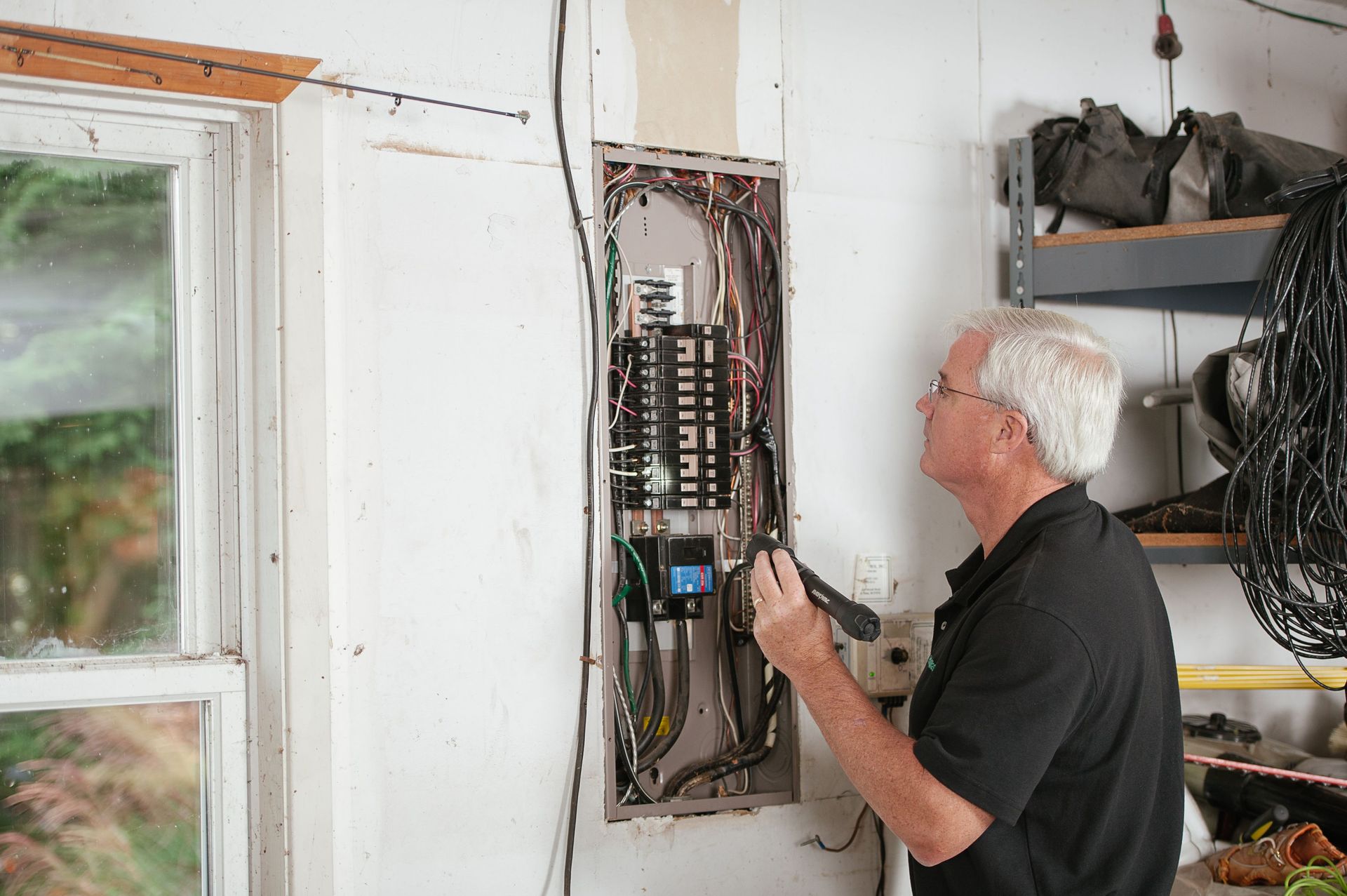
Your 4-point inspection flagged aluminum wiring — and Florida insurers won't cover it unmodified. Trophy Electric LLC, licensed master electricians in Boca Raton with 65+ years of combined expertise, explains the CPSC fire risk data, Florida carrier positions, and all three remediation options. Call (954) 995-9375.
By Trophy Electric LLC July 30, 2026
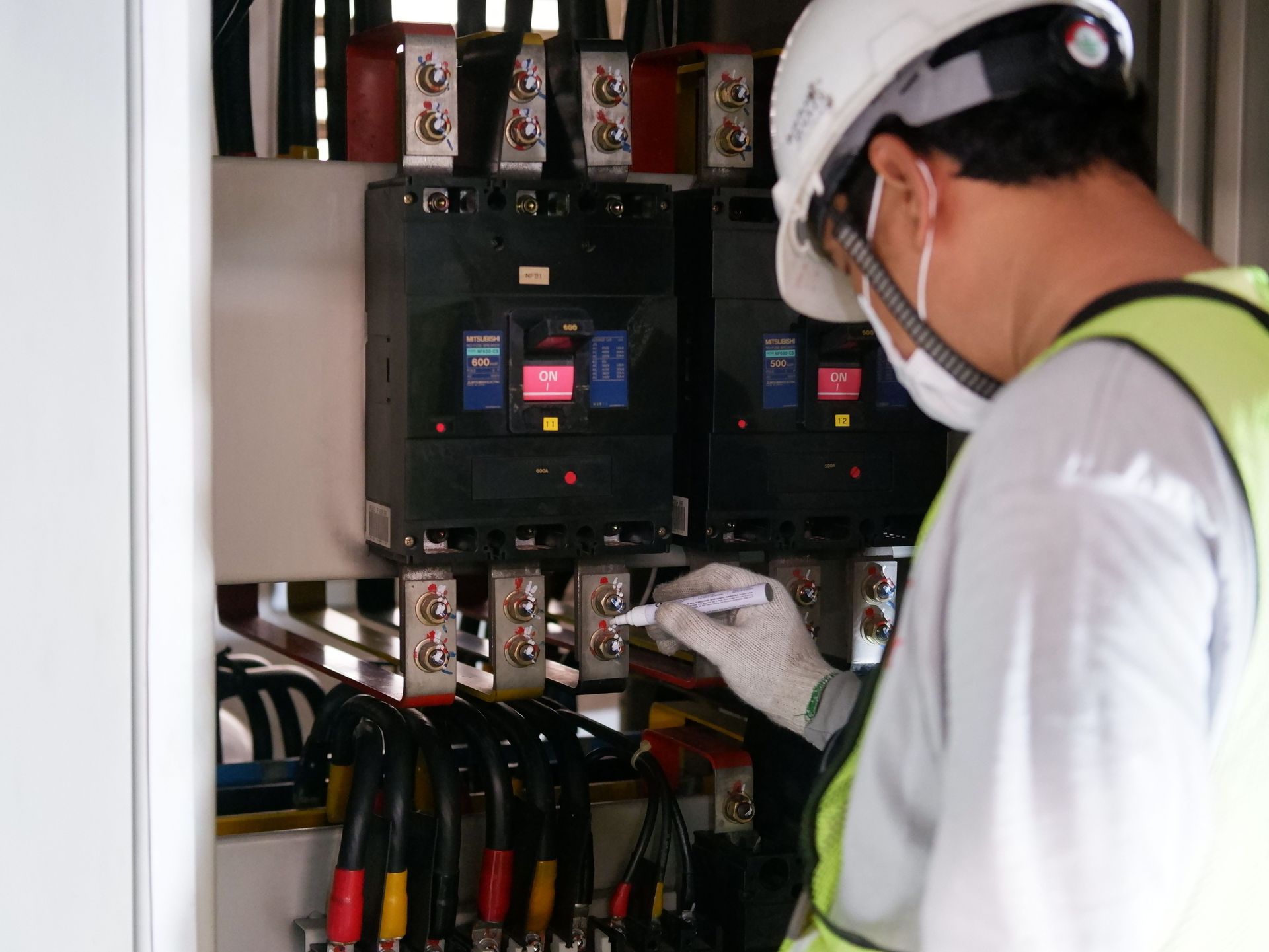
A 4-point electrical inspection in South Florida can make or break your homeowners insurance application. Trophy Electric LLC — licensed master electricians in Boca Raton with 65+ years of combined expertise — explains what inspectors check, the five most common failures in Palm Beach and Broward County homes, and how to prepare. Call (954) 995-9375.
By Trophy Electric LLC July 23, 2026
Standby generator installation in South Florida requires a licensed master electrician for transfer switch wiring, load calculations, and permit coordination across Palm Beach and Broward County. Trophy Electric LLC — 65+ years of combined electrical expertise in Boca Raton — explains the full 2026 process, cost ranges, and what only a licensed electrician can legally do.
By Trophy Electric LLC July 16, 2026
Commercial LED lighting upgrades in South Florida cut energy costs 50–80% and qualify for FPL rebates up to $40 per fixture. Trophy Electric LLC — licensed master electricians in Boca Raton — explains permits, qualifying fixtures, and specialized requirements for gas stations, car washes, and marinas in Broward and Palm Beach County.
By Trophy Electric LLC July 9, 2026
Pool electrical safety in South Florida is governed by NEC Article 680 — and with 1.59 million residential pools in Florida, the risks are real. The CPSC recorded 33 electrocution deaths in pools and spas from 2002–2018. Learn the GFCI, bonding, and code requirements that protect your family, from Trophy Electric LLC — licensed master electricians in Boca Raton serving Palm Beach and Broward Counties. Call (954) 995-9375.
By Trophy Electric LLC July 2, 2026
Marina electrical contractor in South Florida: NEC Article 555 shore power installation, 30mA GFPE protection, fuel dock hazardous location wiring, and electric shock drowning prevention. Trophy Electric LLC — 65+ years combined expertise, licensed master electrician serving Palm Beach, Broward & Miami-Dade. Call (954) 995-9375.
By Trophy Electric LLC June 23, 2026
South Florida pool owners: understand NEC Article 680 bonding, GFCI, and equipotential grounding requirements before your next inspection. Trophy Electric LLC — 65+ years combined expertise in water-adjacent electrical — serves Boca Raton and South Florida.
Show More