Common Electrical Code Violations in South Florida Homes — and What to Do About Each One

Trophy Electric LLC • August 7, 2026

Share this article

The most reliable method is a code compliance inspection by a licensed master electrician — not a standard home inspector, who notes visible concerns but may not identify concealed deficiencies. Trophy Electric conducts full code compliance inspections across Palm Beach and Broward Counties and can identify panel violations, grounding deficiencies, missing GFCI and AFCI protection, and unpermitted wiring. You can also request your home's permit history from your county building department to verify whether past electrical work was permitted and inspected.

Why South Florida Homes Are Uniquely Prone to Electrical Code Violations

Florida's building codes rank among the most rigorous in the nation, a standard shaped by decades of hurricane damage and hard lessons about what happens when electrical systems fail under pressure. But code violations aren't just a legal problem. In South Florida's Palm Beach and Broward Counties, an unresolved electrical violation can void your homeowners insurance, stop a property sale, and in the worst cases, disconnect your power entirely until the issue is resolved.

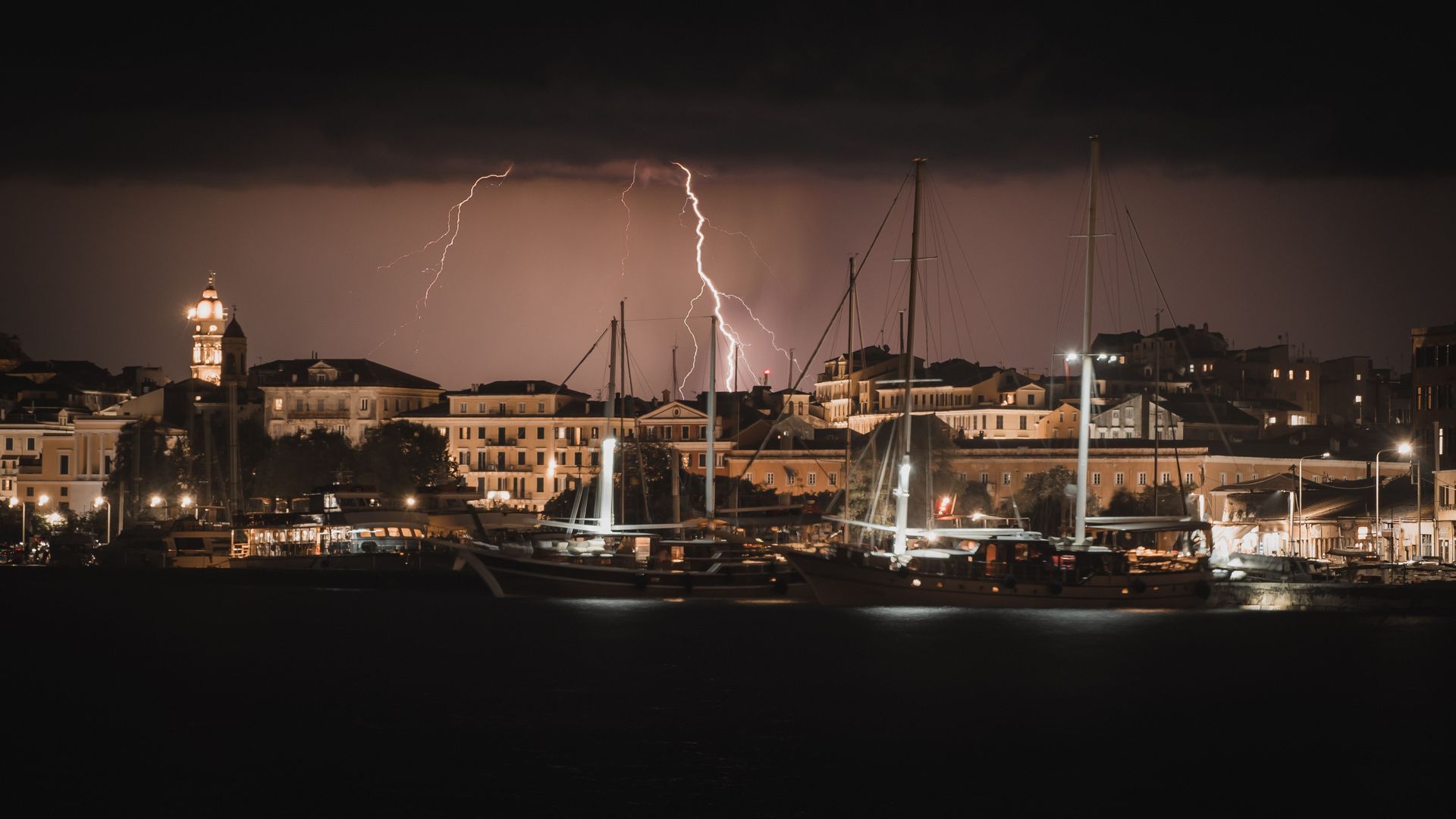
What makes South Florida different isn't just the codes, it's the environment that exposes violations faster. The salt-laden air off the Atlantic corrodes copper ground rods faster than in most of the United States, eroding grounding systems over years without any visible warning. Florida leads the nation in lightning strikes per square mile, which puts grounding and bonding under stresses that never materialize in drier climates. And the region's enormous stock of 1970s and 1980s ranch homes and coastal condos was built to electrical standards that have since been significantly tightened.

For homeowners in Boca Raton, Delray Beach, Boynton Beach, Pompano Beach, and across Palm Beach and Broward Counties, a 4-point inspection, required by most Florida insurers for homes over 25 years old, is often when violations surface for the first time. Understanding what inspectors find most often is the first step toward protecting your home, your coverage, and your investment.

Violation #1: Outdated or Non-Compliant Electrical Panels

Your electrical panel is the most scrutinized component in a Florida home insurance inspection, and for good reason. The panel tells the entire story of a home's electrical health, and in older South Florida properties, that story often contains serious violations.

The most dangerous panels are Federal Pacific Electric (FPE) and Zinsco models, still found in thousands of South Florida homes built between the 1950s and 1980s. Insurance companies across Florida have adopted policies that either refuse coverage entirely or require immediate replacement as a condition of binding a new policy. As licensed electricians in Southwest Florida who work these properties routinely note, FPE Stab-Lok panels present a fire hazard because the breakers may fail to trip during an overload removing the panel's primary safety function ( Source: Service Fanatics, servicefanatics.com). Zinsco panels carry the same problem. Both are flagged in virtually every 4-point inspection they appear in.

A second panel violation that Palm Beach County electricians see constantly is double-tapped breakers . As Maccloud Electric, a Palm Beach County electrical contractor, explains: "A double tap occurs when a previous owner shoved two wires into a single breaker terminal to add a new circuit without installing a new breaker. Most standard breakers are not rated to hold two wires. When two wires are jammed under one screw, thermal expansion in our hot garages causes the connection to loosen over time. A loose connection creates arcing and heat" ( Source: Maccloud Electric, maccloudelectric.com). Double-tapped breakers appear in the majority of older-home panel inspections in South Florida.

There is also a frequently overlooked NEC clearance requirement: panels must have a working space of at least 36 inches of depth, 30 inches of width, and 6.5 feet of headroom in front of them. In South Florida, where the garage doubles as storage for hurricane shutters and beach equipment, blocked panels are a routine code violation — and a genuine safety hazard if a firefighter or electrician needs to reach the main disconnect in an emergency ( maccloudelectric.com).

Three generations of Trophy Electric electricians have diagnosed every panel violation in the South Florida book. If your panel was installed before 2000, a full inspection is worth scheduling now. See our complete guide to electrical panel upgrades in South Florida and our breakdown of Federal Pacific and Zinsco panel replacement.

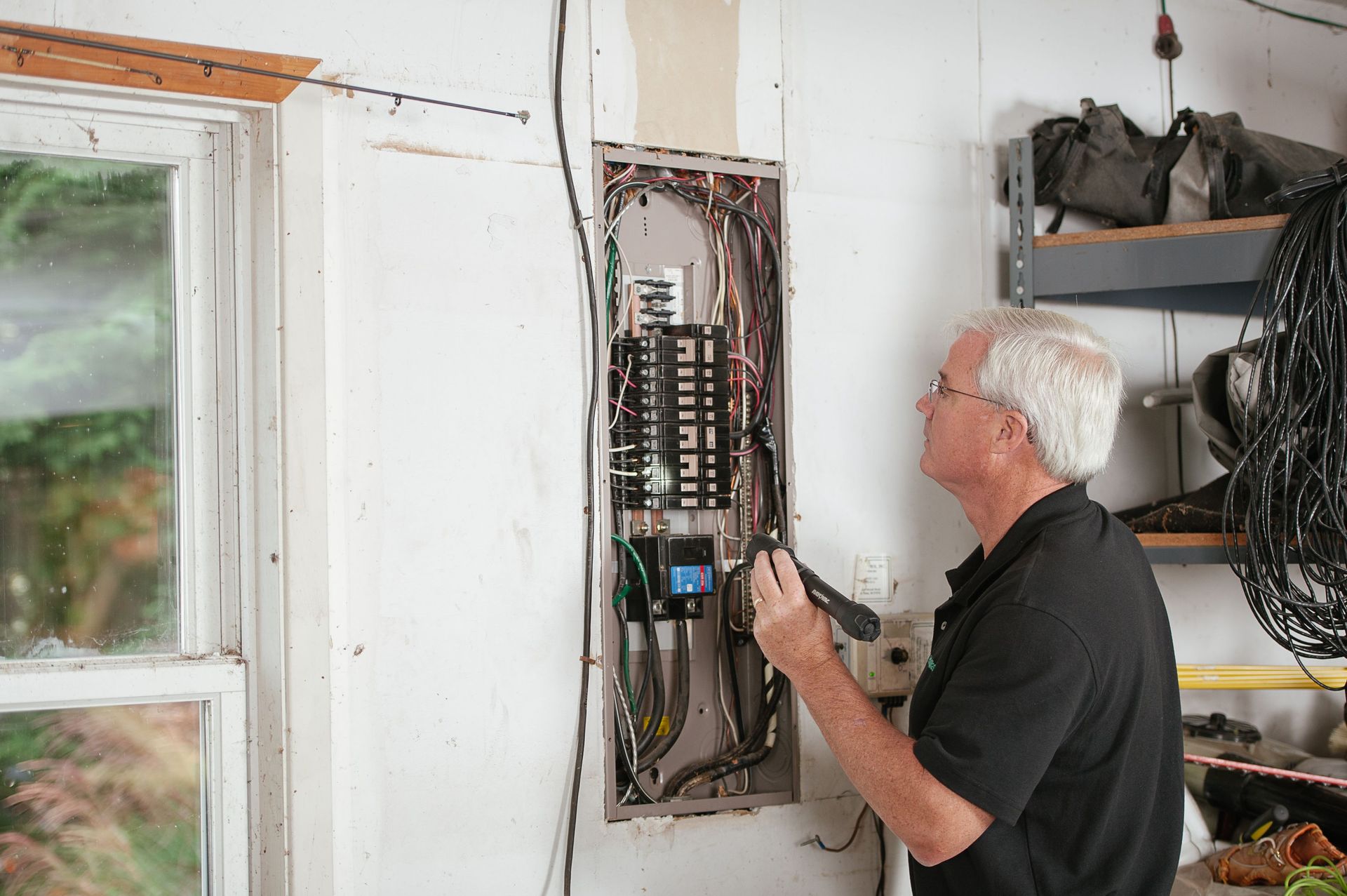
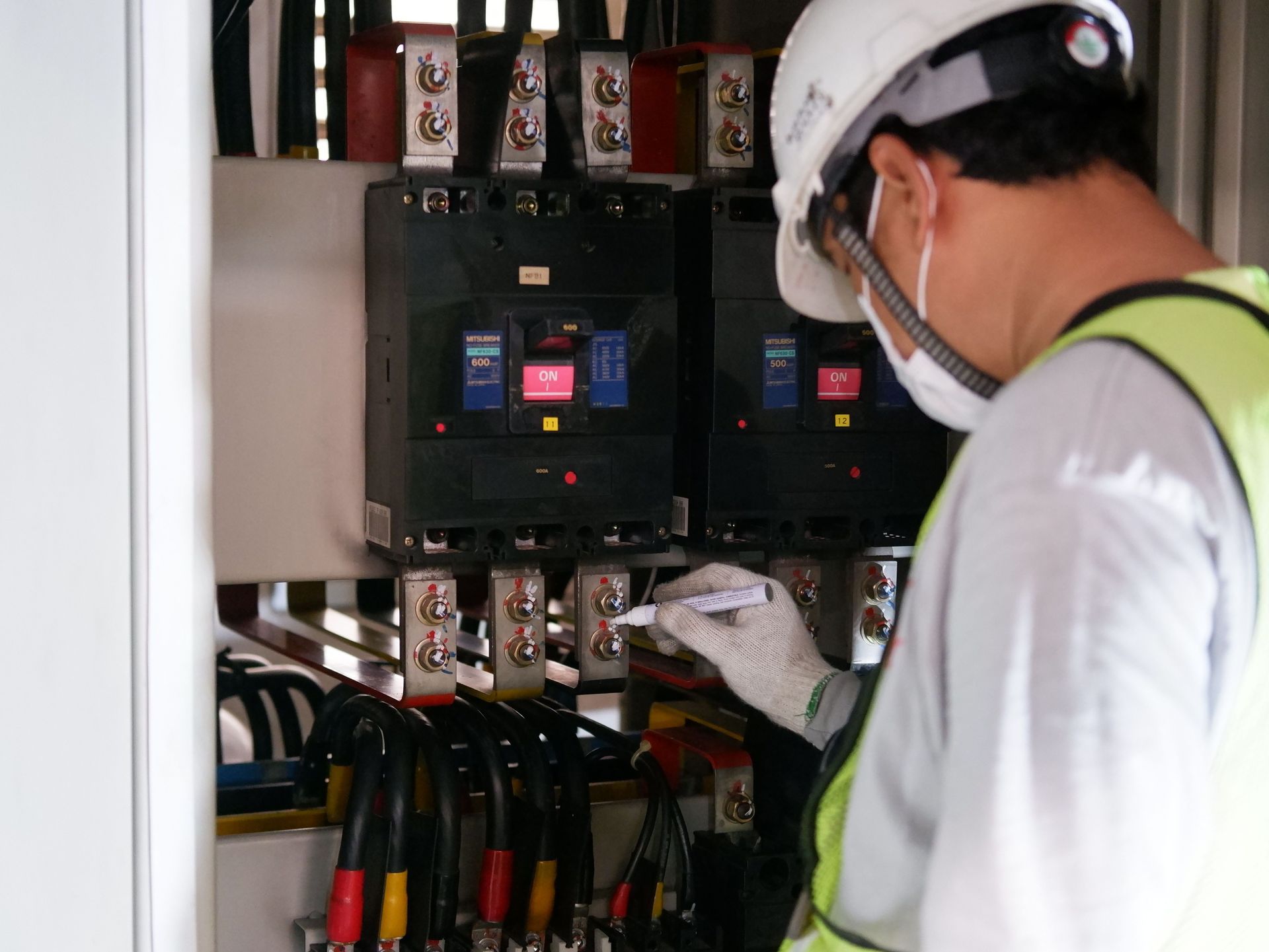
Technician inspecting electrical control panel with gloves and hard hat in a utility room

Violation #2: Missing or Non-Functional GFCI Protection

Ground fault circuit interrupter (GFCI) protection is one of the most straightforward electrical code requirements, and one of the most commonly missed in South Florida's older homes. Under current NEC standards adopted by the Florida Building Code, GFCI protection is required in kitchens, bathrooms, garages, outdoor areas, and any location where water and electricity can interact ( Source: Performance Electrical Contracting, pecjax.com).

The violation typically comes in one of two forms: either GFCI outlets were never installed in these locations, common in homes wired before 1975, or the existing GFCI outlets have degraded and no longer trip correctly when tested. In South Florida's humid, salt-air environment, GFCI devices have a shorter service life than in drier climates. The device may look functional but fail to operate when it's actually needed. Testing every GFCI outlet with the test/reset button periodically, and replacing any that don't trip cleanly, is a basic but critical maintenance step.

For homeowners with pools, a large percentage of South Florida residential properties, GFCI protection requirements are extensive and enforced through NEC Article 680. A missing GFCI at an outdoor outlet or pump circuit is both a code violation and a potential electrocution hazard. For the full breakdown, see our detailed guide to pool electrical code requirements in South Florida.

Violation #3: Missing AFCI Protection

Arc-fault circuit interrupter (AFCI) breakers are now required in bedrooms, living rooms, dining rooms, hallways, and virtually all living spaces in newly constructed or substantially renovated Florida homes under current NEC adoption. Yet many South Florida homes, including those built as recently as 2000, lack them entirely.

While GFCI protection guards against ground faults (electricity finding an unintended path through water or a person), AFCI protection targets a different and equally dangerous failure: the electrical arc. Loose connections, damaged wire insulation, and wiring that wasn't properly secured can all create arc conditions that ignite walls and insulation long before a standard breaker trips. AFCI breakers are designed to detect and interrupt arcing before it can start a fire.

In South Florida's aging housing stock, where wiring insulation has been cooking in an attic at 140°F for 40 years, AFCI protection is a critical layer of fire defense, not just a code nicety. When Trophy Electric conducts code compliance inspections on pre-2000 homes, missing AFCI protection consistently ranks among the top five findings. For the full detail on where AFCI breakers are required and how the Florida Building Code has adopted NEC requirements, see our guide to AFCI breaker requirements in Florida.

Violation #4: Improper Grounding and Bonding

Of all the electrical code violations in South Florida homes, improper grounding is both the most dangerous and the hardest for homeowners to detect. As Maccloud Electric's published analysis notes: "Identifying grounding violations is difficult for the average homeowner because the lights will still work perfectly even if the ground is missing. It is only when a lightning strike or surge occurs that the danger becomes fatal" ( maccloudelectric.com).

South Florida's environment creates two grounding violations that are rare elsewhere. First, the copper ground rods driven into the earth outside your home corrode significantly faster in salty, sandy South Florida soil, sometimes to the point of complete failure with no visible indication inside the home ( maccloudelectric.com). Second, plumbing repairs are a hidden threat: when a plumber replaces a section of copper pipe with PVC, the metal water pipe bonding, which is part of the electrical grounding system, can be inadvertently severed ( maccloudelectric.com).

Given that Florida averages more lightning strikes per square mile than any other state, a degraded grounding system is a serious life-safety issue. Proper grounding and surge protection are interdependent: if grounding has been compromised, even a properly installed whole-home surge device is less effective. See our guide to whole-home surge protection in Florida for the relationship between grounding integrity and NEC 230.67 surge device requirements, and our hurricane season electrical preparation checklist for what to inspect every spring before storm season.

Violation #5: Unpermitted Electrical Work

Unpermitted electrical work is the most common trigger for code violations in Florida, and it creates problems that outlast the original work by years. Homeowners who added a circuit during a DIY renovation, had a handyman wire an outdoor kitchen, or purchased a home where a previous owner cut corners now own those violations, regardless of who did the work.

The consequences are clearly documented. As Suncoast Permits outlines in their 2026 guide to Florida building code violations: "Insurance companies may deny claims, property sales can fall through, and future permits may be held until prior work is permitted retroactively" ( Source: Suncoast Permits, suncoastpermits.com). In practice, an electrical fire in a room where unpermitted wiring exists can result in a denied insurance claim, at exactly the moment coverage matters most.

The financial penalties for unresolved violations are enforced under Section 162.09, Florida Statutes. According to Rimkus, a Florida building code compliance firm: first violations can reach fines of $250 per day; repeat violations carry fines up to $500 per day; irreparable violations can draw $5,000 per violation; and in jurisdictions with populations over 50,000 which includes Boca Raton, Pompano Beach, and Fort Lauderdale, fines can reach $15,000 per violation ( Source: Rimkus, rimkus.com). Unpaid fines become property liens that appear in title searches and must be cleared before a home can be sold or refinanced.

Retroactively permitting electrical work is possible in most South Florida jurisdictions, but it requires a licensed master electrician to expose the wiring, bring it to current code, and pass a final inspection. Trophy Electric handles this type of remediation work routinely, the cost to correct unpermitted work is always less than the cost of a denied insurance claim or a property sale that collapses at the closing table. See our complete overview of Florida electrical permit requirements to understand what work requires a permit and what doesn't.

Violation #6: Wrong Wire Types and Sizing for Florida's Climate

Florida's hot, humid environment is harder on electrical wiring than most climates, and the code reflects it. Using the wrong wire insulation rating for outdoor applications, undersized wire for high-load circuits — like 240V AC units, electric ranges, or EV chargers, or aluminum branch circuit wiring in configurations that haven't been properly remediated are all active violations in many South Florida homes ( Performance Electrical Contracting, pecjax.com).

Aluminum branch circuit wiring, used in South Florida homes built in the late 1960s and 1970s, deserves particular attention. Unlike aluminum service entrance conductors (which remain standard and safe when properly installed), aluminum branch circuit wiring to outlets and switches can loosen at connection points over time due to thermal expansion differences between aluminum and the devices it connects to. The Consumer Product Safety Commission has documented the fire risk. Florida insurers increasingly require documentation of remediation — either CO/ALR-rated devices at every receptacle and switch, or a professional pigtailing solution — before binding coverage on these homes.

Undersized wiring is a growing problem as homeowners add large electrical loads without upgrading the circuits that serve them: an EV charger wired to a circuit that can't handle the load, a second AC unit on an undersized branch circuit, or a converted garage running a workshop on original 15-amp wiring. These aren't just code violations, they're fire risks that develop slowly and silently under sustained load.

What Happens When a Code Violation Is Found

Once a code enforcement officer or inspector identifies an electrical violation, the property owner receives a formal notice identifying the specific code section violated, the required corrective action, and a compliance deadline. Fail to meet that deadline, and fines begin accruing daily. In Palm Beach and Broward Counties, both serving populations over 50,000 — that means potential fines up to $15,000 per violation under Florida law ( rimkus.com).

In Broward County, the Electrical Inspector holds specific authority under the local building code to physically disconnect power to any portion of a wiring system deemed hazardous to life or property. This authority is not a measure of last resort, it can be exercised whenever an inspector determines a danger exists, without waiting for a fine cycle to run.

Unpaid fines become property liens. They appear in title searches and must be cleared before a home can be sold or refinanced. When violations involve insurance-critical systems, panels, grounding, GFCI protection, the insurer may cancel or non-renew the policy until the violation is resolved. The path out of a violation notice always runs through a licensed master electrician who can perform the remediation, obtain the corrective permit, and coordinate the final inspection.

For commercial and multi-family properties in South Florida, violations that surface during 25-year or 30-year building recertification inspections carry similar stakes with compressed timelines. See our overview of building recertification electrical inspections in South Florida for how that process works.

Frequently Asked Questions

  • How do I find out if my South Florida home has electrical code violations?

    The most reliable method is a code compliance inspection by a licensed master electrician, not a standard home inspector, who notes visible concerns but may not identify concealed deficiencies. Trophy Electric conducts full code compliance inspections across Palm Beach and Broward Counties and can identify panel violations, grounding deficiencies, missing GFCI and AFCI protection, and unpermitted wiring. You can also request your home's permit history from your county building department to verify whether past electrical work was permitted and inspected.

  • Can I sell my South Florida home with unresolved electrical violations?

    You can list it, but the buyer's inspection will surface the violations, and in most transactions the buyer will require correction before closing — or negotiate a price reduction. Active code enforcement violations are material facts that must be disclosed under Florida law. If a violation has become a property lien, it must be resolved before the sale can close at all.

  • How long do I have to fix an electrical code violation in Florida?

    Violation notices specify a deadline that varies by jurisdiction and severity. Immediately hazardous conditions can require correction within days. Standard violations typically allow 30 to 90 days. Once the deadline passes, fines accrue daily. The right approach is to engage a licensed electrician immediately to pull the corrective permit and schedule the final inspection before — not after — the deadline expires.

  • Will my homeowners insurance cover the cost of fixing electrical violations?

    No. Homeowners insurance covers sudden, accidental losses, not pre-existing code violations or the cost of bringing a system into compliance. What insurance does cover is the damage caused by an electrical fire, but only if the policy remains valid. Many Florida carriers cancel or refuse to renew coverage when a 4-point inspection reveals panel violations, missing GFCI protection, or other electrical deficiencies. Correcting the violation is what restores insurability — it is not itself a cost covered by your policy.

  • What is the difference between a 4-point inspection and a code compliance inspection?

    A 4-point inspection is performed by an insurance adjuster or certified inspector to evaluate four systems, electrical, roofing, plumbing, and HVAC, to determine whether an insurer will bind coverage. It is focused on insurer risk, not comprehensive code compliance. A code compliance inspection by a licensed master electrician is a full evaluation against the NEC and Florida Building Code, identifying violations that an insurance-focused 4-point may not specifically assess. A home can pass a 4-point inspection and still carry code violations that surface during a sale, a renovation permit application, or a formal code enforcement review.

Recent Posts

By Trophy Electric LLC August 17, 2026
The 2026 NEC revised Section 514.11(A) — emergency shutoff rules for fuel dispensers — to fix a rule that broke down at large fueling sites. Trophy Electric LLC, South Florida's petroleum and marina electrical specialists with 65+ years of combined family expertise, breaks down what changed and whether it's Florida law yet. Call (954) 995-9375 for a free consultation.
Florida gas station fuel canopy at dusk, subject to the state's emergency generator law
By Trophy Electric LLC August 13, 2026
Florida's gas station generator law (Fla. Stat. § 526.143) requires transfer switches and backup power at qualifying fuel stations near evacuation routes — and violations are criminal misdemeanors. Trophy Electric LLC, licensed master electricians serving Palm Beach, Broward, and Miami-Dade Counties, breaks down who's covered, the 2025 grant program that can offset your costs, and how to get compliant. Call (954) 995-9375 for a free consultation.

Illuminated emergency exit sign above a door in a South Florida commercial office corridor
By Trophy Electric LLC August 10, 2026
Emergency lighting and exit sign requirements for Florida commercial buildings fall under NFPA 101 — non-compliance can mean fines up to $15,000 per day under Florida Statute Chapter 162. Trophy Electric LLC, licensed master electricians serving Palm Beach, Broward, and Miami-Dade Counties, breaks down the illumination standards, the testing calendar, and who's responsible. Call (954) 995-9375 for a free consultation.

By Trophy Electric LLC August 4, 2026
Your 4-point inspection flagged aluminum wiring — and Florida insurers won't cover it unmodified. Trophy Electric LLC, licensed master electricians in Boca Raton with 65+ years of combined expertise, explains the CPSC fire risk data, Florida carrier positions, and all three remediation options. Call (954) 995-9375.
By Trophy Electric LLC July 30, 2026
A 4-point electrical inspection in South Florida can make or break your homeowners insurance application. Trophy Electric LLC — licensed master electricians in Boca Raton with 65+ years of combined expertise — explains what inspectors check, the five most common failures in Palm Beach and Broward County homes, and how to prepare. Call (954) 995-9375.
By Trophy Electric LLC July 23, 2026
Standby generator installation in South Florida requires a licensed master electrician for transfer switch wiring, load calculations, and permit coordination across Palm Beach and Broward County. Trophy Electric LLC — 65+ years of combined electrical expertise in Boca Raton — explains the full 2026 process, cost ranges, and what only a licensed electrician can legally do.
By Trophy Electric LLC July 16, 2026
Commercial LED lighting upgrades in South Florida cut energy costs 50–80% and qualify for FPL rebates up to $40 per fixture. Trophy Electric LLC — licensed master electricians in Boca Raton — explains permits, qualifying fixtures, and specialized requirements for gas stations, car washes, and marinas in Broward and Palm Beach County.
By Trophy Electric LLC July 9, 2026
Pool electrical safety in South Florida is governed by NEC Article 680 — and with 1.59 million residential pools in Florida, the risks are real. The CPSC recorded 33 electrocution deaths in pools and spas from 2002–2018. Learn the GFCI, bonding, and code requirements that protect your family, from Trophy Electric LLC — licensed master electricians in Boca Raton serving Palm Beach and Broward Counties. Call (954) 995-9375.
By Trophy Electric LLC July 2, 2026
Marina electrical contractor in South Florida: NEC Article 555 shore power installation, 30mA GFPE protection, fuel dock hazardous location wiring, and electric shock drowning prevention. Trophy Electric LLC — 65+ years combined expertise, licensed master electrician serving Palm Beach, Broward & Miami-Dade. Call (954) 995-9375.
By Trophy Electric LLC June 23, 2026
South Florida pool owners: understand NEC Article 680 bonding, GFCI, and equipotential grounding requirements before your next inspection. Trophy Electric LLC — 65+ years combined expertise in water-adjacent electrical — serves Boca Raton and South Florida.
Show More